
Menu path: Settings > Resources Editor
With the resource editor translations can be created and / or updated.
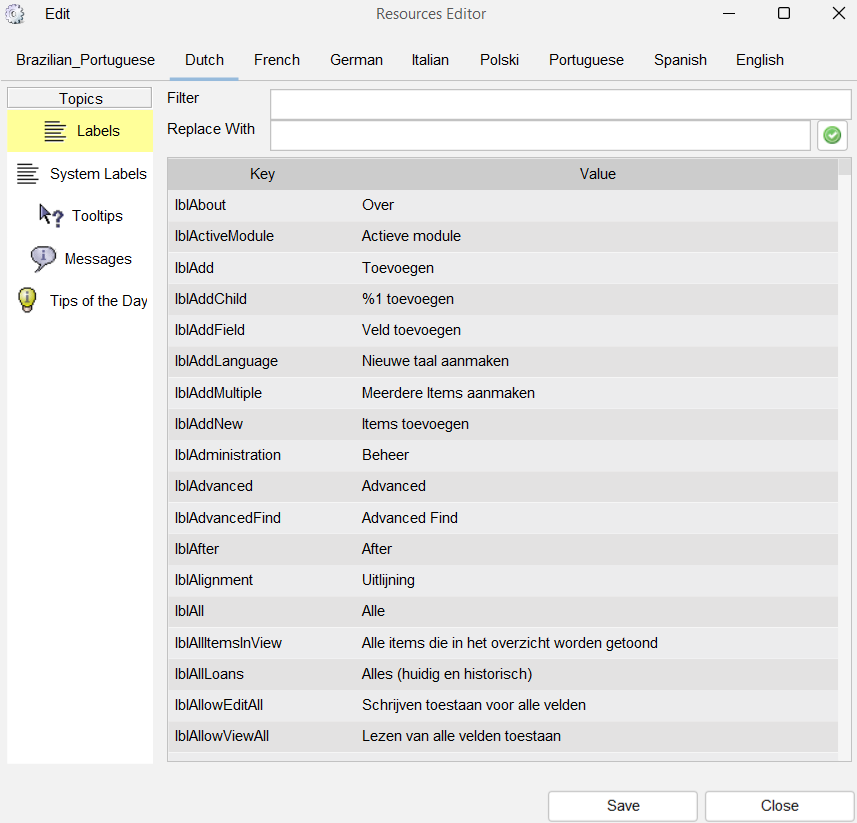
There are several categories of ‘resources’ such as labels and messages. You can either edit one of the available languages or you can choose to create a whole new language.
Finding the text #
The resource editor shows the texts of all languages on one screen. Type in the search field to find a text. It searches the key, the translation, the description and the language you compare with. You can also filter on a topic, and on the texts which are not translated or have been changed. Modules and fields are shown with readable names.
Editing resources #
Type a new translation in the table. To change a word everywhere, type it in the search field, type the new word in Replace With and press Replace all, which replaces it in the texts which are shown. Use Download to save a language to a file and Load file to read one: the texts which differ become changes on the screen, and nothing is saved until you press Save.
Press Save to save all the changes you have made. A text must be filled and must keep the parameters of the English text (a percent sign with a number, such as %1). Texts which do not are not saved. English cannot be changed: it is replaced at every upgrade.
Create a new language #
Select the ‘create a new language’ option from the edit menu. Enter the name of the new language pack and select the language on which this new language should be based. Basing a language on an existing language means that its values will be used in the new language until they have been edited.
Make sure to save your changes before closing the dialog.
When you are connected to a server, the resource editor changes the texts on the server. The full client retrieves them when it starts. In the web client administrators have the same editor, see Administration (Web Client).


